
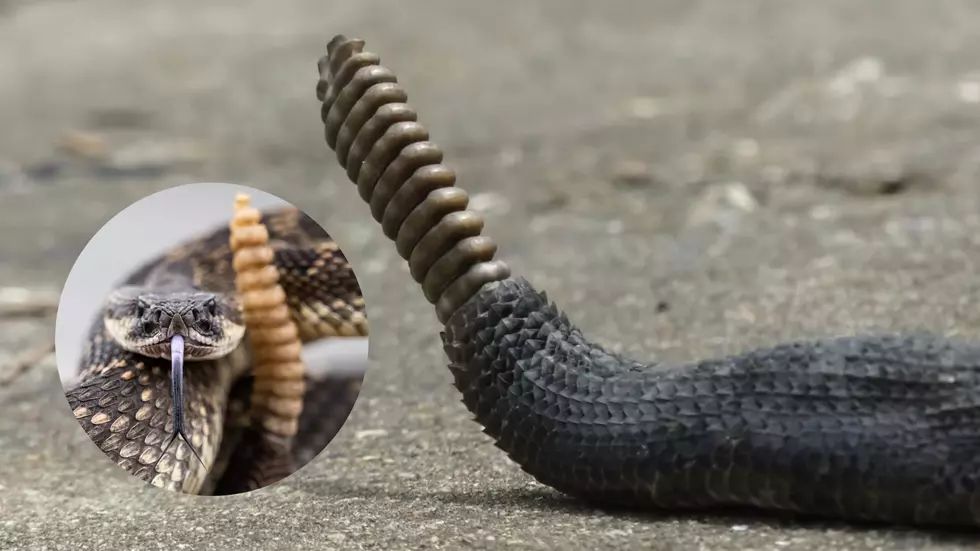
Iowa’s Most Venomous Snake is No Surprise
If you’ve spent time hiking as much as I have, then there is a good chance you've come across some of our more scaly friends. I always see black rat snakes and garter snakes, and I recently almost stepped on a beautiful corn snake while hiking at Ringneck Ridge.

But have you ever heard the warning buzz of a rattlesnake? I haven't had that experience yet, but that sound would most likely come from the Timber Rattlesnake in Iowa. By the way, it holds the title of Iowa’s most venomous snake.
Honestly, it’s not even a close race.
The Timber Rattlesnake is the largest and most toxic of Iowa’s three native venomous snakes, and America's own Pit Viper. It can grow up to five feet long and packs a serious punch with its venom. While it prefers to be left alone and will usually warn you with its rattle before ever striking (unless hunting), its bite can be dangerous, even life-threatening, without immediate medical attention.

What Makes It So Dangerous?
The Timber Rattlesnake’s venom contains powerful hemotoxins, which break down blood and tissue. In some parts of the country, this snake also carries neurotoxins, but those are rare in Iowa’s population.

Its venom isn't just potent; it also delivers a lot of it. A bite can inject over 100 milligrams of venom, more than enough to cause serious swelling, pain, and internal damage if untreated. Thankfully, with modern antivenom and a fast medical response, fatalities are extremely rare.

What About Iowa’s Other Venomous Snakes?
Iowa has three other venomous snakes, but they are much less of a threat:
- The Eastern Massasauga is a small, shy rattlesnake found in a few wetland areas. It’s secretive and rarely encountered. Its venom is weaker and less likely to be fatal.
- The Prairie Rattlesnake once lived in western Iowa, but sightings are now extremely rare. It’s still venomous, but not as potent as the Timber.
- Copperhead: Found only in extreme southern Iowa, near the Missouri border and along the Missouri River bluffs. Its bite is almost never fatal, and many bites are “dry” (no venom injected). Still, it’s venomous and deserves caution.
READ MORE: Of the 28 Snakes in Iowa, 4 Could Kill You
Should You Be Worried?
Not really. Timber Rattlesnakes aren’t aggressive. They don’t chase people, and most bites happen when someone accidentally steps on or near one. If you leave them alone, they’ll do the same.
If you're out hiking, stay on trails, watch where you step, and listen for that iconic rattle. Remember, no one likes a rat, and snakes play an important role in controlling rodents and keeping our ecosystems healthy.

So yes, it’s no surprise the Timber Rattlesnake tops Iowa’s venom charts. But with respect and awareness, there’s no reason to fear this slithery and protected neighbor.
Photos: Iowa's Pictured Rocks Wildlife Management Area
Gallery Credit: Tom Drake
Photos: Iowa's Backbone State Park
Gallery Credit: Tom Drake
More From Eagle 102.3